


Our KL Academy of Polo ponies were fantastic in the KLPC Low Goal League. That the ponies can work in lessons in the morning with beginners, and then play and hold their own against the best horses in the club in the tournament in the afternoons, is testament not only to this string of horses, but also to our feeding program.
Our horses were fantastic. And it is worth noting that not one of them were oated up on any racehorse feeds.
 KL Academy of Polo’s 14 polo ponies horses and 9 school horses, and 8 privately owned horses I am directly in charge of are all fed with Zack’s Tack Polo Mix, an extruded rice bran product locally made for us by ENA.
We kept to our usual hard feeds of Zack’s Tack Polo Mix and Supa Soy, only increasing the polo mix slightly for some horses who needed a little more energy.
Unlike some teams that go heavy on the racehorse at the first mention of a tournament, we followed the 3-point plan for Feeding Your Horse for Increasing Workload, by Anna Pesta Dunaway, PhD
- Evaluate their current body condition and calorie needs.
- Support their muscles
- Don’t forget electrolytes
Then we adjusted the Zack’s Tack Polo Mix for those playing in the tournament to what they needed, according to their body scores. This was done more than two weeks before the tournament, gradually making the adjustments over that period.
Zack’s Tack Polo Mix is an extruded Stabilized Rice Bran (SRB) that is such a good cool feed, even if I say so myself. We’ve proven it for the last 16 years since I started using it on my playing horses prior to the 2007 SEA Games.
Stabilised Rice Bran (SRB) is scientifically a fantastic feed for horses. Being an extruded feed, it has already been cooked, therefore digestibility is almost 98% in SRB. That means your horse has access to almost all the goodness it eats, rather than excreting a large number of hulls or whole oats.
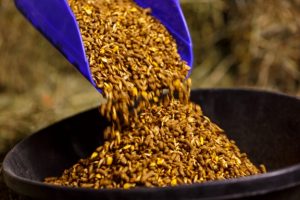 Racehorse feeds might provide a more instant energy, but higher ups and lows are not what we polo players actually like in our horses. A low glycaemic feed is what works best for us. Our polo ponies should be a lean as stayers, not big and bulky sprinters or weight-lifters.
Oats was traditionally fed to horses for its protein content. The hull or husk, is not digested though, and digestibility is only around 60% for crushed oats, slightly less if they are only clipped and dressed.
Many horses have a poor reaction to starch, which is why many horses on oats will become ‘fizzy’ or hyperactive.
With the high oil levels in the form of poly-unsaturated fats from the rice bran in Zack’s Tack Polo Mix, cool safe energy is available for exercise like polo, but it is also used for racing and equestrian competition. You can expect less fizzy, highly strung behaviour as a result of feeding this steam extruded product.
The horse has a longer lasting, consistent energy level without the sugar highs because of the product’s low glycaemic index (GI). Digestibility is increased due to the steam extruded manufacturing process. This extrusion also destroys any harmful bacteria whilst retaining all the nutrients.
The manufactured product is thus eaten slower resulting in more chewing and saliva produced buffering stomach acids leading to decreased risk of ulcers, colics and digestive upsets.
Years ago, the racehorse and polo industry moved away from oats and towards muesli feeds, which is how I would describe racehorse feeds, the likes of Mitavite Sustaina, Hygain TrackTorque or even Zack’s Tack’s Pro Sport Mix. There are some oats in those feeds, but they also offer more digestible and accessible sources of protein.
In 2002, I started feeding KER’s Equi-Jewel, a Stablised Rice Bran. We imported it from Australia at a huge cost.
When we could have SRB made for us in Malaysia, I jumped at the chance and completely switched all my horses on to it in 2007. It has worked wonders.
 It is reputedly a cool feed, with reduced body temperatures during exercise. In this current heatwave, this means our horses might have coped better than the horses on grain and muesli feeds. Every advantage helps.
Having our horses ride-able makes all the difference. A revved up racing machine might look good and run fast, but it isn’t necessarily going to get you to the ball first.
As legendary polo player and horse trainer Corky Linfoot says, in polo, you need QUICK, not FAST.
He is absolutely right.
What is the point of being FAST if you can’t stop or turn on the ball? What’s the point of your horse pulling your arms out when what you want is to be able to play the game?
The KL Academy of Polo ponies still did beginner player lessons all through the tournament without changing character, while winning the tournament for us.
Were they quick enough? The results say so.

Here is an article on feeds, by Dr Ray Biffin, that we published in 2020:
WHY RICE BRAN
Dr. Ray Biffin B.V.Sc., Dip. Ed.
SRB (Stabilized Rice Bran) products for horses are the fastest-growing products in the equine nutrition market internationally. The reasons for this include:
- High energy
- Gluten-free
- Relatively high quality protein compared to cereal (wheat, barley, oats) and maize.
- Efficient protein utilization (lower protein loss) demonstrated by lower ammonia levels in stable excrement), partly due to protein quality and probably partly due to anabolic effect of gamma-oryzanol.
- Hypoallergenic (claimed by ADM, also demonstrated in many therapeutic diets for dogs and humans)
- High quality oil profile high omega-9 (monounsaturated) makes it relatively simple and inexpensive to achieve a desirable omega 6:3 ratio.
- Widely recognized to provide “cool energy” that is, horses are less excitable and more manageable when fed high-energy diets with SRB megajoules compared to cereal megajoules. In hyperactive children this has been shown to relate to the absence of gluten, and is most probably the reason for the observed difference in horses, but could also be due to gamma-oryzanol which has been shown to raise endorphins (within-body calmatives)
STABILIZATION OF RICE BRAN
- Gamma Oryzanol
- Rice bran is a product of the rice milling process. It is high in fat, fibre, beta carotene, B complex vitamins and Vitamins E.
- It also contains gamma oryzanol, a naturally occurring potent “anti-oxidant” which helps to protect all cell membranes from damage that can occur during strenuous exercise.
- Gamma oryzanol is reported to have muscle building properties in horses and other animal species.
- Energy from Rice Bran
- It is high in polyunsaturated fats which are a rich source of calories and therefore energy. Energy derived from fat is “cool energy”. In contrast to rice bran, the main energy sources in cereal gains are carbohydrates, particularly starch which can then horses to be nervy. This may lead to further grain related disorders such as tying up, laminitis, colic and low-grade diarrhoea.
- Rice Bran is typically low in starch and provides an excellent alternative energy source to cereal grains.
- Processing for Stabilization of Rice Bran
- Produced from the protective outer layers of the rice kernel, it is high in unsaturated fats but unprocessed rice bran can quickly become rancid during storage. Therefore, rice bran must be “stabilized” either by heating or extrusion to deactivate the “lipase” enzyme which causes rancidity and spoilage. Rice bran obtained during milling contains 20% edible oil. The oil quality deteriorates rapidly due to enzymatic activity. Bran has to be stabilized through inactivation of lipase enzyme system.
- Steam Extrusion stabilization through Steam Extrusion followed by oven roasting is the preferred method for processing rice bran. Steam extrusion is a sophisticated process that combines heat and pressure to rapidly cook and expand the rice bran. It has dual benefits… it deactivates the damaging lipase without destroy8ing the nutritional value of the rice and at the same time, pressure cooking the rice enhances the digestibility when fed to horses.
- Steam Extruded Rice Bran
- Being steam extruded, the product is consumed more slowly than either unprocessed or pelleted feeds, this will reduce gastro-intestinal problems commonly associated with unprocessed feeds.
- The starches, proteins and oils of the finished products are untangled this manufacturing process improves both digestibility and palatability and more importantly, the vital nutrients are not destroyed.
- Reported benefits (Studies done by Nutrition & Health Sciences UPM & Asia Rice Foundation Expounds the benefits of Rice Bran)
- Reduced body temperature during exercise.
- Calming effect.
- Decreased weight of intestinal contents.
- Improved body condition and hair coat.
- Reduced risk of colic and laminitis.
- Reduced risk of tying up during exercise.
- Lower heart rates and plasma lactate build up during exercise.
Thanks to Equine Nutrition Australasia for the reproduction of the article, “Why Rice Bran.”
Zack’s Tack Polo Mix is a stablised rice bran product. Here is some technical information of its contents and analysis:
Supa Soy
Locally, Supa Soy Pellets is another high fibre alternative that is offered at a much better price than Speedibeet. We feed 50:50 hay to Supa Soy.
Supa Soy is soaked in warm water for about 5 minutes before you feed it. It doubles in weight from the soaking.
Supa Soy Pellets are a scientifically formulated Super Fibre Pellet. They are 100% Soybean Hull from human grade soy beans.
This product is a highly digestible fibre with a low glycaemic index, meeting energy requirements yet reducing diet related digestive issues.
Its low starch content makes it ideal to feed all types of horses and will improve digestive health by being readily fermented in the hindgut, producing volatile fatty acids which provide a steady stream of slow release energy.
Again, this is a cost saving as the per kg cost of Supa Soy is much cheaper than that of Timothy or Bermuda Hay.
FYI, Zack’s Tack Polo Mix, Zack’s Tack Horse Cubes and Supa Soy are all export grade products, licensed for export to Australia.
It is important to remember that not all horses are the same. As Kentucky Equine Research states, “Selecting the right forage for a horse depends largely on its energy needs. A hard keeper might require a calorie-dense legume, like alfalfa (lucerne) or clover, or lush pasture. On the other hand, an overweight pony might do well on a mid-quality hay and very little pasture.”
Remember, if you are going to change your feed, do it gradually. Remember the 12 Rules of Good Feeding.
Most important in a feed change is that you remember Rule #4: All changes in feed should be made gradually over 10 days to two weeks.
If in doubt, consult your vet.
Related Links:
Klarita Kills It
The Best Seat in the House
KLPC Low Goal League 1
Recent PBITG Links:
FEI Sustainability Handbook for Event Organizers
My BTSC
Caroline Chew Amongst Definite Entries for FEI Dressage World Cup Final
 R.I.P. Mr. A
What-The-Fish
Asian Games Technical Handbook
Malaysian Polo 2023
Paris 2024 Olympic Pictograms
The Prophet’s Thumbprint
Pre-Season Tack Check
In Memoriam: Marco Fuste
Argentina: A Quantum Leap
CSI 1* EAM-KLPC International Show Jumping
Cody’s Wish – A Real Life Fairy-tale
Authentically Australia
FRICking Amazing
CSI Thoughts
The Cycle
KLAP and the KL Youth Polo Academy
Stable Science
A Sexy MVP
Level 3
Hat-Trick
Julian and Aimann’s Handicaps Go Boom
 Boom! Boom! Boom Chukka Laka
Into the Final
Boom Through to the Semi-Finals
The Low Goal League
Inaugural FIP Women’s Polo World Championship
Breeds and Breeding
Coaching the Coaches
Help Rebuild Yayasan Chow Kit
KL Academy of Polo partners with International Polo Academy
Bad Helmets
The Chronicle of the Horse: Arguments Against 3-Rider Teams Don’t Convince
Be Careful What You Wish For
The Flying FRICsters
Pony Clubbing at KL Academy of Polo
Helmet Safety
The Cost of Horses
The 2011 FIP Polo World Cup
Mark Wightman: Waking the Tiger


