

Chaos theory explains that within the visible randomness of complex, chaotic systems, there are inherent repetition, patterns, self-organisation, interconnectedness, self-similarity, and constant feedback loops.
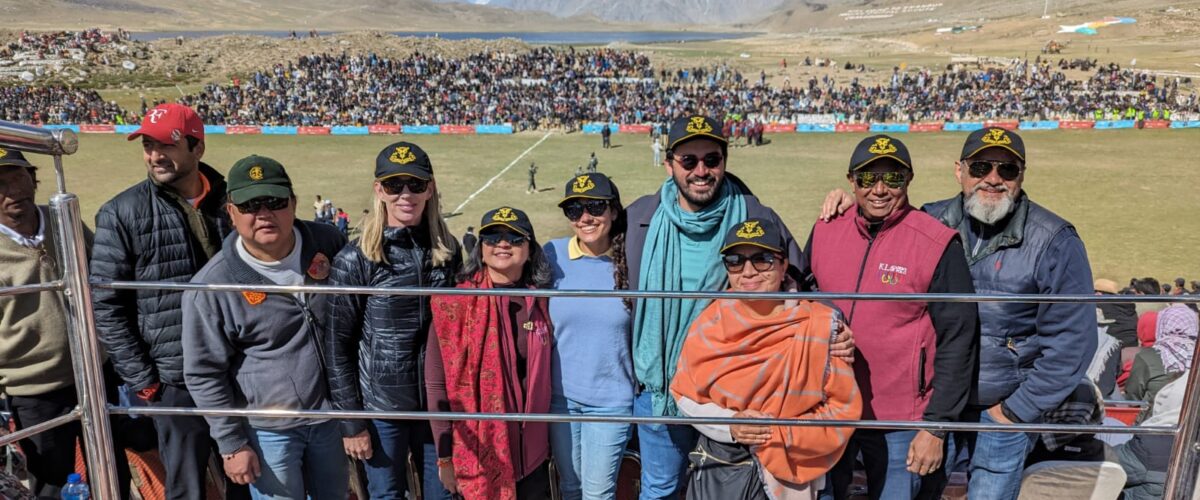
After two fabulous nights acclimatising at Mastuj Fort, we made the last push up to Mas Junali, the highest polo ground in the world, at Shandur Top. The mountains, the waterfalls – it is glimpse of heaven as we drive up. 4WDriving over mountain roads, driving single-file under overhangs, hugging steep slate sides and looking down even steeper drops that seem to have no bottom, it is not a drive for the faint of heart.
We didn’t encounter many cars coming down the hill, so traffic seemed less this year. It lulled me into thinking there might be less people at Shandur. That was a mistake. The festival had grown ever larger. People were camped everywhere, over a much larger area than I remember. The village was much expanded, tents and cars and people everywhere.
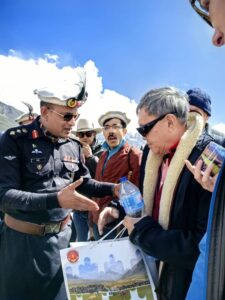 We met Col. Sami of the Chitral Scouts at the VIP enclosure, who welcomed us to Shandur with gifts. Watching the game between Chitral B and Gilgit B was a reintroduction to mountain polo. Gilgit Baltistan won this game quite easily, and as they had won the C and D games too, it set up the scene for a great final the next day. The Chitrali, who we were with, were quietly crapping themselves that Gilgit would sweep the series and break their decade-long winning streak in the big A game the next day.
Part of the breathlessness of the Shandur Polo Festival is that it is actually hard to breathe. At 12,000 feet up, the air is rare. In the first hour, I found everything difficult. Walking any incline required a break or two to catch my breath. It didn’t help that it was extremely cold, with the temperature dropping to single digits, with some hail and a breeze that made our campfire the warmest thing we could find, besides our glam tents.
The tents this year were much larger. No crawling around in these babies. Having a charpoy meant we didn’t have to sleep on the freezing ground. A hot water bottle, a sleeping bag and a heavy duvet meant I snuggled under the covers immediately after dinner.
All our menus were chosen by Natasha Qizilbash, who also organized all makan at the 2019 tour. This year was even better – every single meal was different, and tuned to where we were. At the cold top, it was heaven to have a really hot meal. Natasha did an amazing job, organizing the cooks and servers, and curating every meal. Even with vegans, vegetarians, pescatarians and red-blooded polo players in our group, every meal was diverse and wonderfully tasty. A favourite with everyone was her Milk N More Chia Seed Pudding. Natasha is a food blogger you can follow on Instagram at if.natcancook,
 None of us slept very well, even if we were on private grounds, away from the hordes at Shandur Top. I woke once to brave the cold to trudge to the amenities, and then quickly back to the warmth of my charpoy, after downing a Tylenol for the mild, dull thud in my head that I associated with oxygen deprivation.
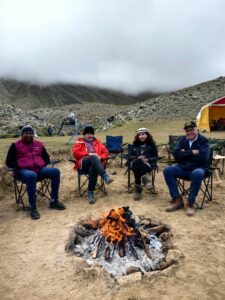
My new Huawei GT Pro watch recorded I had about 5 hours sleep in total, which I thought was enough. I was out of my tent by 5 AM, and joined Qubilai and Glenn around the campfire they had already restarted. With a mug of hot Chai at 5 AM around a dancing campfire, talking quietly as the camp slowly came to life was a pleasant start to what we knew would be an exciting day.
Then it was a quick repack of the few things we had brought to the Top, and a hot breakfast of pratha, puri, chana, eggs and sausages. We struggled up the hill to our 4WD’s and then were on the road to the VIP enclosure. It was only 1 KM away, but fighting through the tumult of the ten thousand tents and campers took nearly twenty minutes.
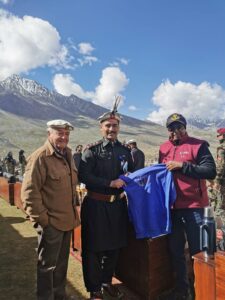 Then we were back in the VIP enclosure. I managed to catch Capt. Ali of the 144 Wing of the Chitral Scouts, one of the organizers of the festival, and presented him with a KL Academy of Polo hoodie as a token of appreciation of his help.
As a past captain and national coach, Qubilai was interviewed over the PA system, and we were welcomed as special guests, listed by the countries we represented. There were few other foreigners at the Shandur Polo Festival, but we did run into Marco Focaccia, there from Dubai Polo Club. Also there to admire the Shandur madness was Hamza Mawaz, the rising 4-goal star of Pakistani polo.
There were mercifully few speeches before the paragliders and hang gliders came down the mountain tops. There were sword dances and rifle drills to keep the massive crowd entertained, but it was the polo match everyone was waiting for. By the time the mayhem began, the scoreboard was no longer visible, blocked by the thousands on the mound. The police used heavy ropes to keep the spectators off the field, and on occasion the game had to be stopped to move people back so that the line judges could do their job of bowling the ball back into play if it went over the back-lines.
Gilgit started the better, and pressed the red Chitral side back. All twelve players cramped in the Chitral half made for what seemed like bedlam. I started to make sense of how they defend. Most of the time it was meeting the ball side-ways across the line. Of course, with no umpires, there is no appealing, no line, no right of way. Whoever is fastest to the ball has the right, as long as he also has the might.
Chaos Theory
Applying Chaos Theory to Shandur Top was one of my interests of returning to Shandur, four years after I had witnessed the madness of the freestyle mountain polo. As a polo official who has organized and directed national and regional games and multiple world championships, I deal with rules, regulations, tournament formats, and every form of officialdom you can imagine. My encounter with freestyle mountain polo in 2019 was an introduction, not to chaos, but how chaos organizes itself.
I tried to make sense of their strategies.
Defence was the main game. With no rules on hooking, there was a lot more hooking of backhands than in umpired polo – if a player was losing a ride-off there was nothing to stop him leaning across the other horse and player to make a hook or even try to play the ball on the other side of his opponent.
Attack was left to a solitary forward, the #1. The number 2, 3, 4 and 5 packed midfield, and the #6 generally played at deep back.
Midway through the first half, Chitral came to life. With their influential #3 and #4 supporting the attack, they broke through for the first score. The ball was handed back to them for the tumbuk, the flying restart where a player gallops to the centre-line with the ball in his right hand and lets fly with it to restart the game. It flew into the Gilgit half and within half a minute there was a second score. The Gilgit side, who had been dominating was now down by two goals. It got worse for them as Chitral notched another to take a commanding 3-0 lead. It was not till just before half-time that Gilgit finally got one back.
The half-time was supposed to be 10 minutes, but true to Pakistani time, it took 45 minutes, as new dancers and bands appeared. Finally, the sky divers jumped from 20,000 feet, trailing smoke and landing with pin-point accuracy.
Second Half
Gilgit did come back but at 5 – 3 but were not making any more headway. Tactics changed. Suddenly, things got violent. The best Gilgit player, their #4 left the field with what looked like a broken nose. He had been playing without a helmet or elbow pads unlike some of the Chitral players, who were sensibly protected.
Someone had literally put his nose out of joint. While the Chitral players were deciding who should retire to keep the team’s players level at five apiece, the Gilgit #4 straightened his nose, got back on his horse, and got on with it. He did take his revenge, grabbing his opposite number in a headlock, when they next got to grips. The crowd roared its approval.
Despite the heroics, Gilgit never got ahead of Chitral, who surged ahead to finally win the game 7 – 5. There was a pitch invasion with 45 seconds left when Chitral supporters thought they had heard the horn. It took only a few minutes before the field was cleared and the game resumed. At the final horn, the second pitch invasion was more assured, more joyous. The Chitral players were pulled from their horses and hoisted onto shoulders and carried to centre-pitch for the prize-giving.
We headed straight for the exit and down the mountain, back to Mastuj. With only one small mountain road, we wasted no time as we wanted to be ahead of the traffic. We had time for a quick late lunch at Mastuj before going on to Chitral, getting there around 10 PM.
Social License
The Shandur Polo Festival prides itself on playing freestyle mountain polo the way it has always been played. That was one of the attractions, certainly for us too, but in this day and age where the social license to use horses for sport is always in the spotlight, the glare of neglect is large. Despite playing a full 25 minutes, not a single horse was unsaddled or sponged down before it went out again for another 25 minutes. There was no water offered to them. No cooling or massage. I’m not even sure girths were loosened. All that happened was that the horses were kept walking in circles by their grooms.
The quality of horses is much improved from what I saw in 2019. It’s a surprise the teams don’t look after their horses better. I am in no doubt they will get better performances out of them if they just practiced a little more horse care.
As we headed down the hill, the word had spread of a Chitral win, and everyone was celebrating. Kids by the roadside were cheering and dancing and throwing fruit to passengers in cars. I wondered when I would be back again, and how long Shandur will continue to exist.

With special thanks to Natasha Mustapha, Glenn Cheng, Datuk Kannan and Datin Joanne Lopez for sharing their Shandur photos.
Related Links:
 A Blog-in-the-garden
Shandur Bound
RTOC&SPF: The Big Match
RTOC&SPF: Mastuj & Shandur Top
RTOC&SPF Day 2: Gol National Park & Buzkashi
RTOC&SPF Day 1: Islamabad to Chitral
Once-In-A-Lifetime
Royal Tour of Chitral and the Shandur Polo Festival
Recent PBITG Links:
Burma-Malaya and Stevenson Cups
Speeding Up
Klarita Kills It
The Best Seat in the House
KLPC Low Goal League 1
And We Are Racing
A Day at the Races
Hannah Yeoh visits KLPC
Fuelling Up
Klarita Kills It
The Best Seat in the House
KLPC Low Goal League 1
FEI Sustainability Handbook for Event Organizers
My BTSC
Caroline Chew Amongst Definite Entries for FEI Dressage World Cup Final
R.I.P. Mr. A
What-The-Fish
Asian Games Technical Handbook
Malaysian Polo 2023
Paris 2024 Olympic Pictograms
The Prophet’s Thumbprint
 Argentina: A Quantum Leap
Cody’s Wish – A Real Life Fairy-tale
Authentically Australia
FRICking Amazing
CSI Thoughts
The Cycle
KLAP and the KL Youth Polo Academy
Stable Science
A Sexy MVP
Level 3
KL Academy of Polo partners with International Polo Academy
Bad Helmets
Be Careful What You Wish For
The Flying FRICsters
Pony Clubbing at KL Academy of Polo
Helmet Safety
The Cost of Horses


