


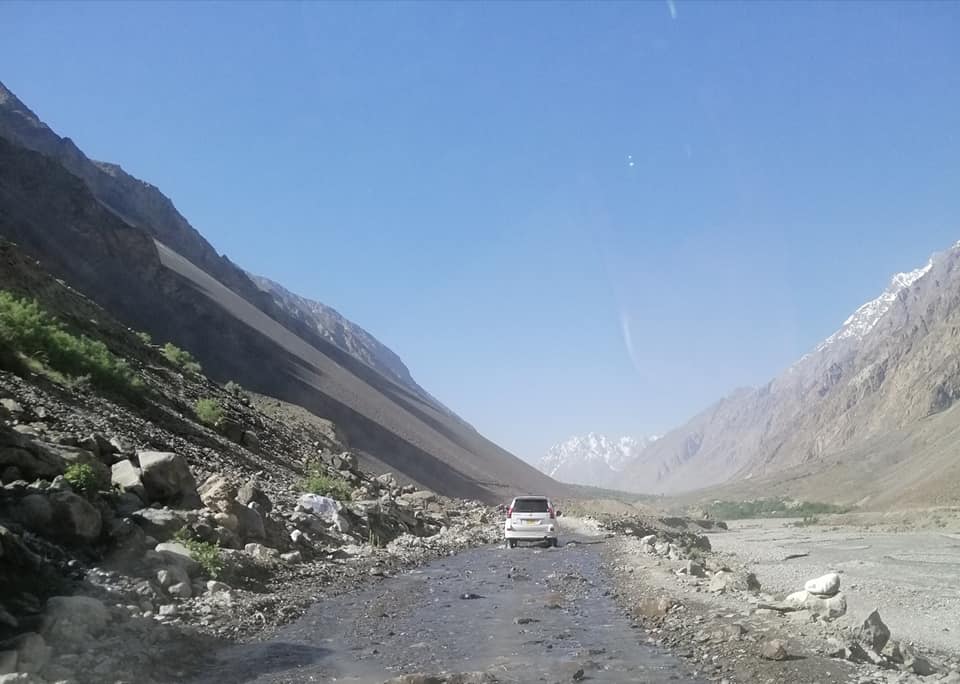
 Day 3 saw the tour head to Mastuj. We followed the river for 150 km from Chitral to Mastuj, climbing to 9,000 feet above sea level. The drive was full of spectacular scenery. Ravines, gorges, snow-capped mountains, running streams and always the Mighty Mastuj racing down.
Along the way, we stopped for a very nice lunch at Khoragh. We sat in the garden and enjoyed a beautiful local meal of chicken, beans, and vegetable and fish cutlets.
The roads were challenging, so when we finally got to Mastuj, it was a relief to find Prince Siraj’s six villas, and luxury tents waiting for us in a beautiful garden by Mastuj Fort. It was a happy hour in a picturesque garden setting.
The Minister of Sport and Tourism His Excellency Muhammad Atiff Khan joined us that night, for dinner. All our meals are curated by Natasha Qizilbash, a renowned foodie. You can Istagram her at if.natcancook. Dinner was a roast turkey, with an arrabiata pasta and some local breads.
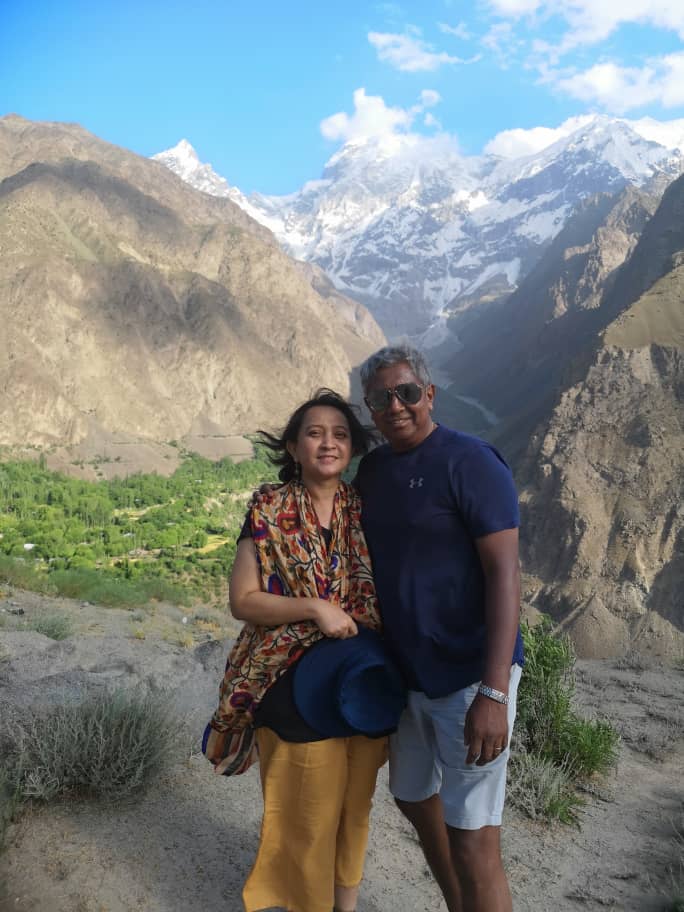 The next morning, we set off very early for Shandur. It was a three-hour drive taking us up another 3,000 ft to the roof of the polo world. The roads were slightly better than the roads from Chitral to Mastuj.
We got to Shandur Top at 11 in the morning. At 12,500 feet up, Shandur Top is the highest polo field in the world. It is breath-taking, not only because of the magnificent views, but also because the air is rare. Many of us found ourselves gasping for air if we did any exercise.
Shandur Top was teeming with thousands of people who had gathered there for this polo festival. A whole festival village of tents had risen on the side of the hill. The festival village that springs up every year just for the three-days of the Shandur Polo Festival. There was trade in everything from jewellery, sunglasses and clothes to live chickens, fruit and other produce. There were many food tents.
Below them the army had camped by the polo ground. They had five heli pads. Security was tight as a visit by Prime Minister Imran Khan was expected to Shandur for the big game.
We had our own camp at Prince Siraj’s campsite just beyond the Shandur Top field.
In the afternoon we watched our first freestyle polo match. It was the match between the Chitral and Gilgit B teams. For the record, Chitral B won the match 9-5.
It was interesting to observe the differences between freestyle mountain polo and modern polo.
 The field is 220 x 60 yards, so while it is quite long, it is very narrow. Goal posts are set only 4 yards apart.
Six-a-side, this polo is much more of a team game. There is almost none of the tiki-tiki type polo of one player carrying the ball.
With no umpires, there is a total absence of appealing. It doesn’t cross their minds to raise their sticks as it is pointless – they just get on with the game and go to the next play. As with modern polo, anticipation is everything. In mountain polo, there are no whistles, no hit-ins, no penalties. It is non-stop action.
If the ball goes out of play, it is immediately thrown back in, either by the crowd, if it goes over the sides, or by the goal judges, if it goes over a back line. If a goal is scored, the ball is given to the scoring team. A player carries it to the centre line. Before he crosses the line, he must throw the ball in the air and hit it or hit at it. This is called a tumbuk and is used to restart the game after a goal.
It is all action for the full duration of each of the 25-minute chukkas. While it was clear that some horses tired, none were flogged on. While it was frenetic action all the time, it isn’t as fast paced a game as we play. There isn’t much galloping.
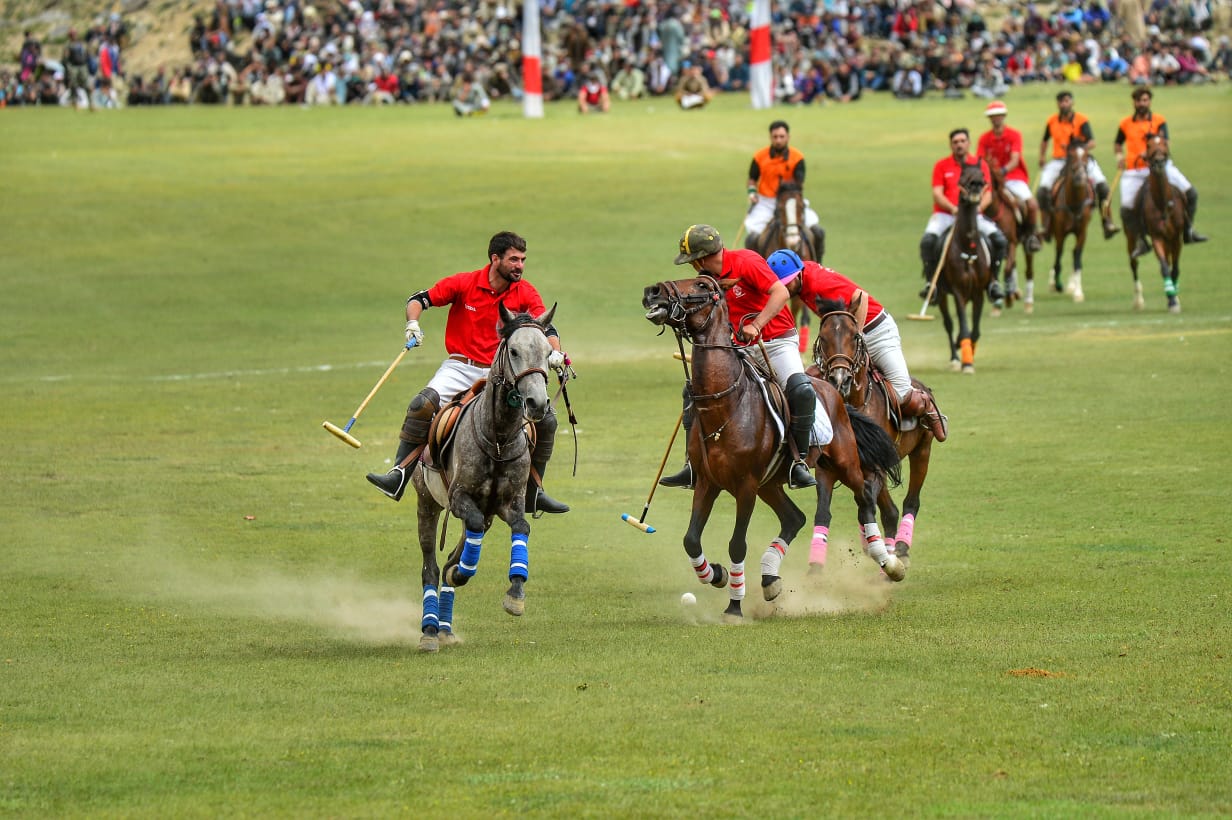 Having said that, it isn’t slow polo, either. With no line or right of way, there is almost no stopping on the line that we see in ‘modern polo’. Instead we get a fast-flowing free-form polo unrestricted by lines. While there is no right of way, might is right and a player galloping hard at the ball is hardly ever hit at a bad angle.
Without a player ‘on-the-line’ having a right of way, the mountain game is played with strategic interceptions. Defenders prefer to meet the ball, placing themselves where they could best intercept a pass, rather than turning onto the ‘line’. As the field is only 56 meters wide, they spread themselves to cover the width.
With no rules on hooking, the hooks come in from everywhere. High, low, behind your back, across the legs, anything that works. There is no anger when a player is ‘foul-hooked’ – they just get on with the game.
Interestingly enough, there was none of the blocking we get in our so-called modern polo. If a player was in front of a hitter, he was not really doing much worthwhile. Players would only hit and hardly ever tapped the ball. This meant the blocker was out of position for a bump or a hook to spoil the shot. It was great to see a game without blocking.
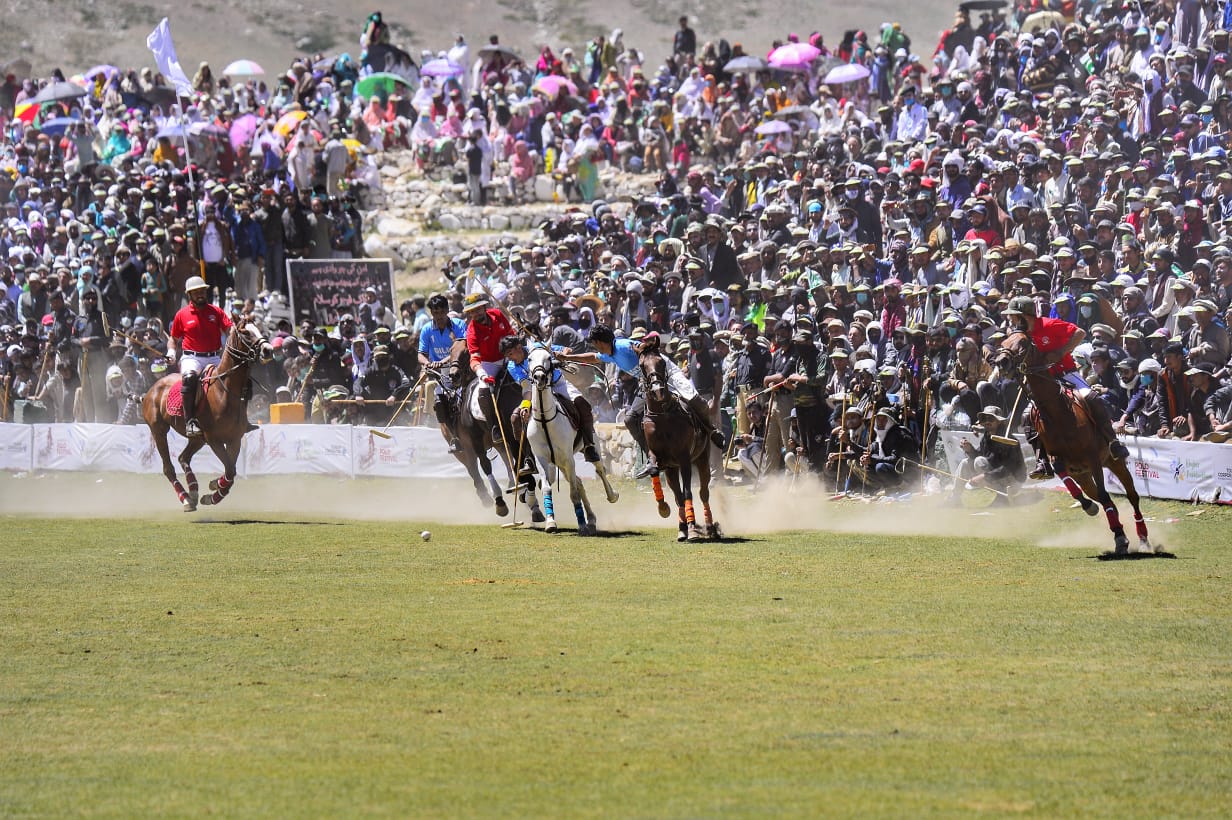 Like the modern game, horsepower plays a major role. The Chitrali team was lamenting their lack of funds to buy new horses, while the Gilgit team, with state support, had bought a new string of taller horses.
Some players had helmets and modern polo mallets, but just as many preferred to use their Shandur made mallets. I’ve never seen to many broken mallets in a game before. Players would have their stick-man run onto the field to hand them another mallet.
You could tell which players also played conventional polo. They were the ones who tried to tap round a turn or check and go inside other players. It didn’t always work.
Mountain Polo is a different breed of polo. It is certainly a forerunner to the modern game. As a tournament director and umpire, it was refreshing to see it played. In modern polo, we make rules based on safety and danger. Many of these are a modern construct that work in theory. Watching polo in Shandur has made me see that some of these theories do not work in practice.
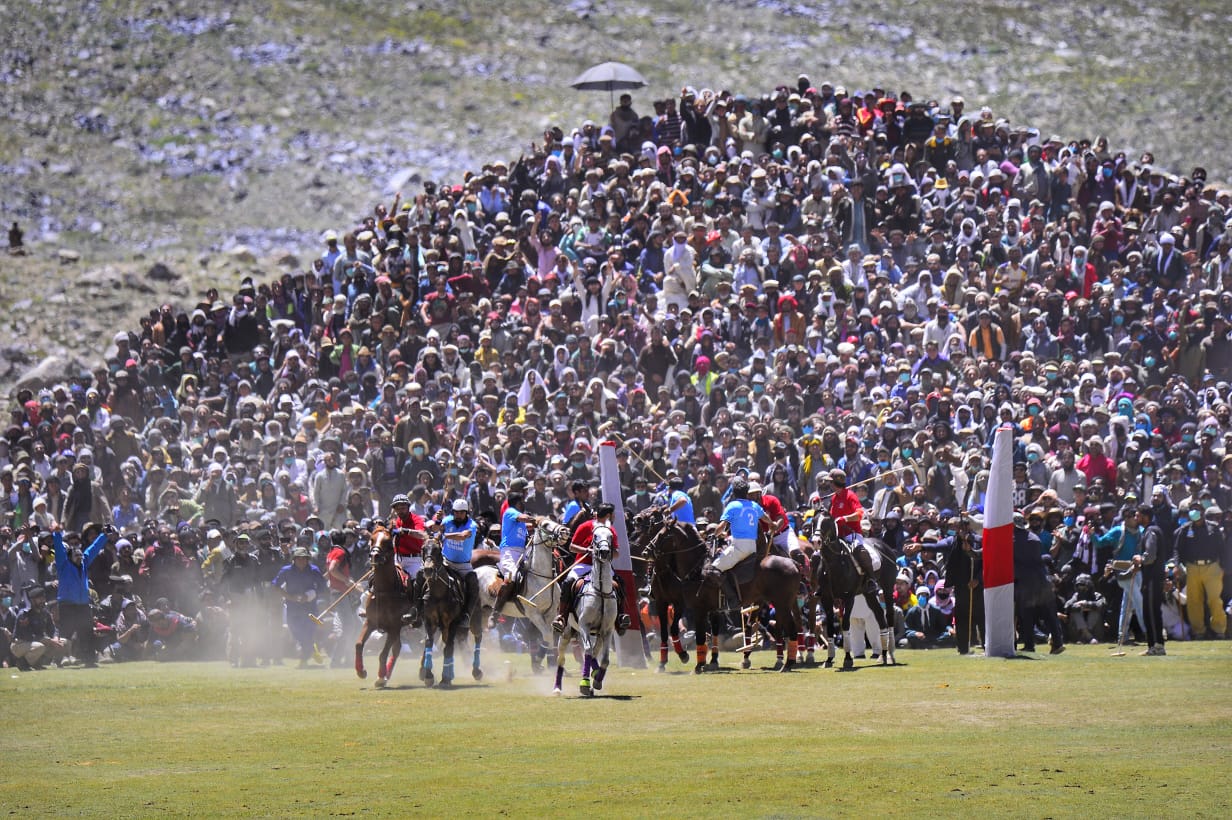
Thanks to the Pakistan Ministry of Tourism for the action photos.
Related Links:
RTOC&SPF Day 2: Gol National Park & Buzkashi
RTOC&SPF Day 1: Islamabad to Chitral
Once-In-A-Lifetime
Royal Tour of Chitral and the Shandur Polo Festival


