

Already embattled with Covid-19 restrictions, Thai equestrians have had to battle an even deadlier disease that has taken the lives of some of our equine friends. 192 Thai horses are acknowledged to have succumbed to African Horse Sickness, the first outbreak of its kind in Thailand. Sciencemag.org says the count may actually be as high as 302.
African Horse Sickness is a disease endemic in sub-Saharan Africa and is spread by biting midges and mosquitoes. Horses are considered the most susceptible, with nearly 90% dying if infected. It kills roughly half of infected mules and 10% of donkeys.
The outbreak was first reported in Pak Chong province and said to have begun as early as mid-February. It was reported to Thailand’s Department of Livestock Development in March, and once confirmed, it was immediately reported to the OIE – World Animal Health Organization on 28th March 2020.
Movement of equids was immediately stopped, as much as it could be controlled.
“However, some infected horses had already moved out of the outbreak zone. On 10 April, its last official update, DLD reported 192 horse deaths across 37 racing, sports, and leisure riding farms. But according to a source working closely with DLD who spoke on condition of anonymity, a total of 302 deaths had been declared to officials by 14 April and numbers are still rising.” ~ Sciencemag.org.
The OIE has organised a series of well attended webinars to educate Thailand and indeed all their close neighbours about this deadly disease and how best to handle the situation.
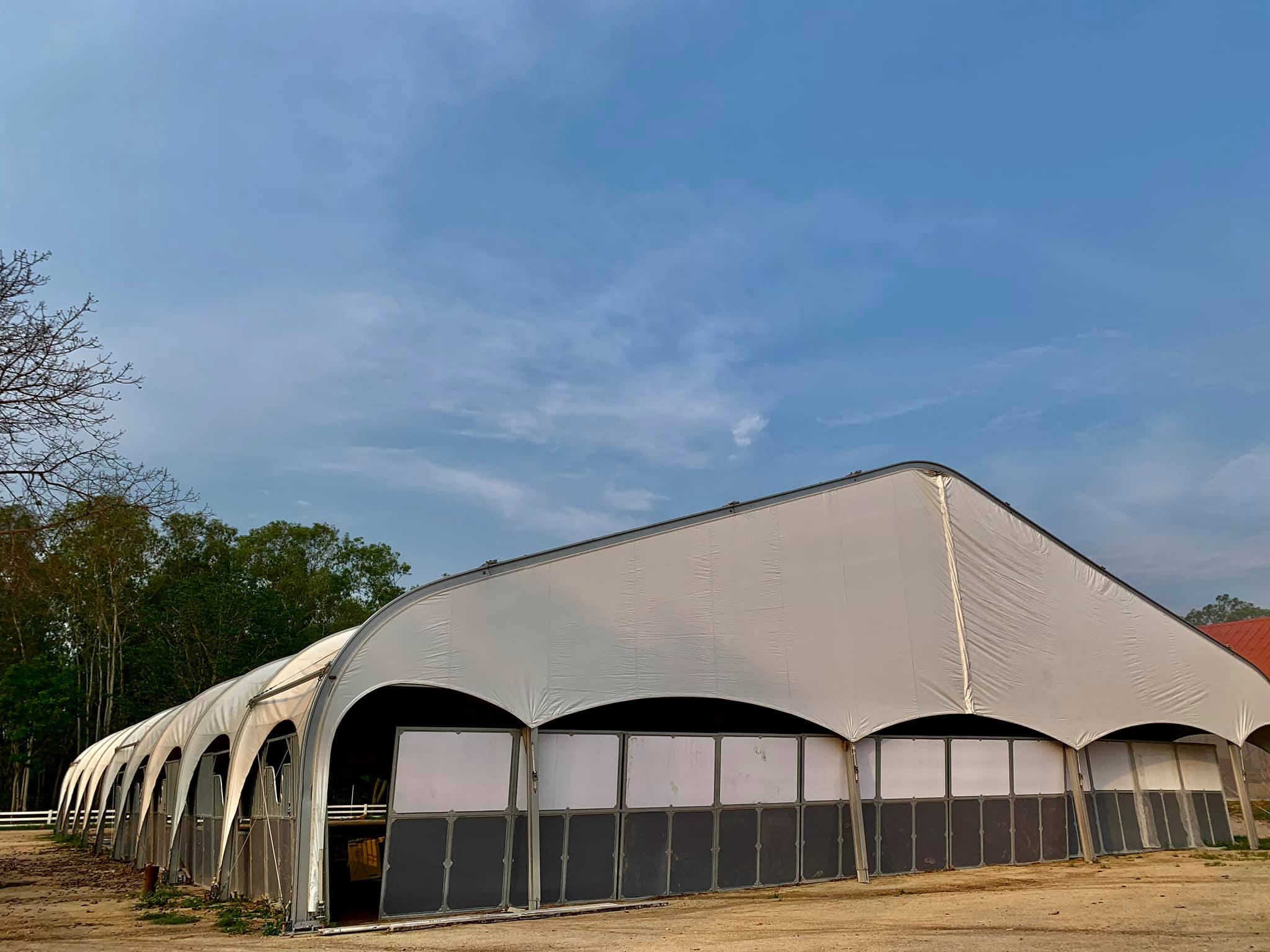
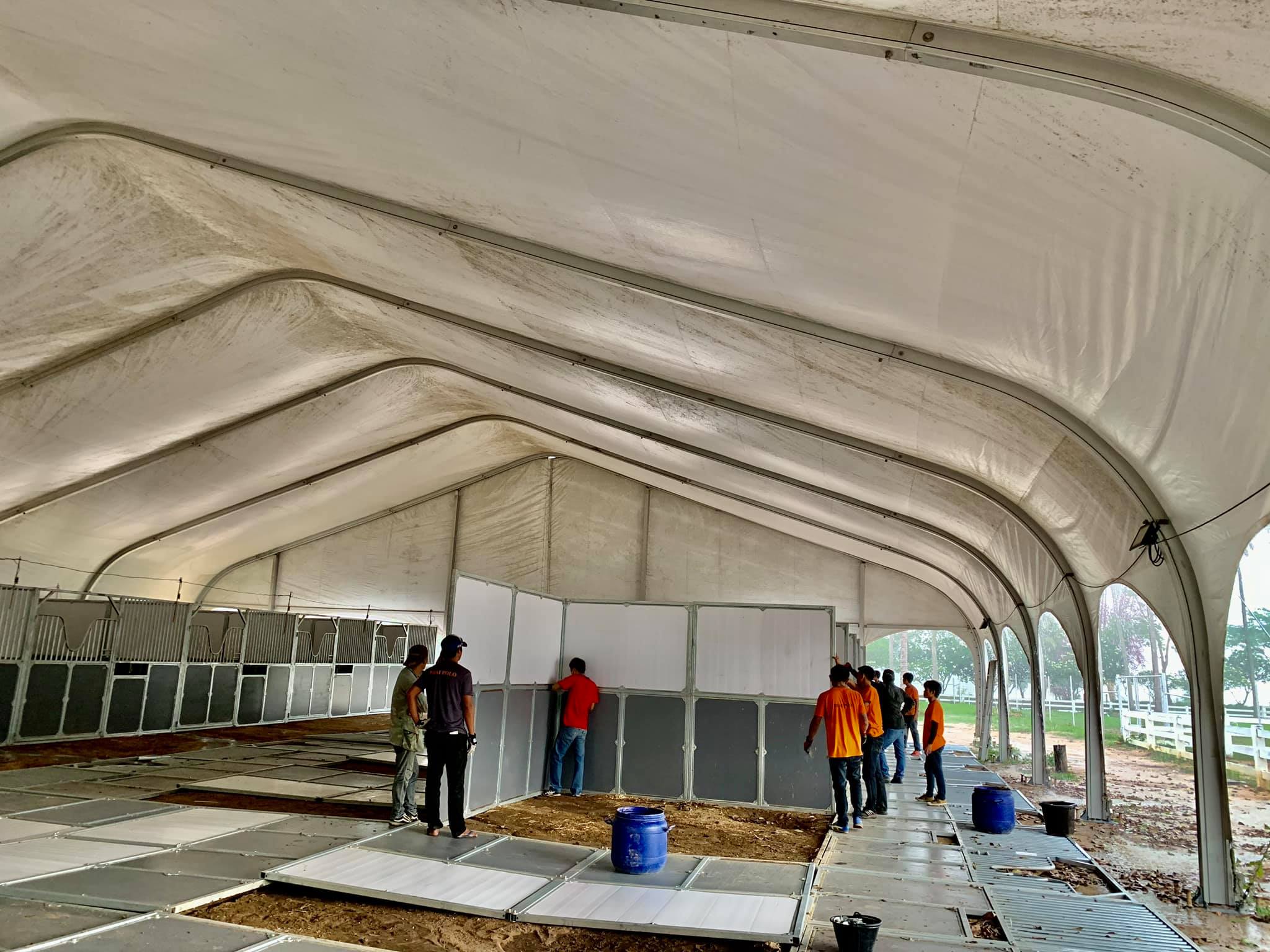
Many equestrian stables went into emergency mode, vector proofing their stables as best they can. Double doors into the stable area are being built where possible.
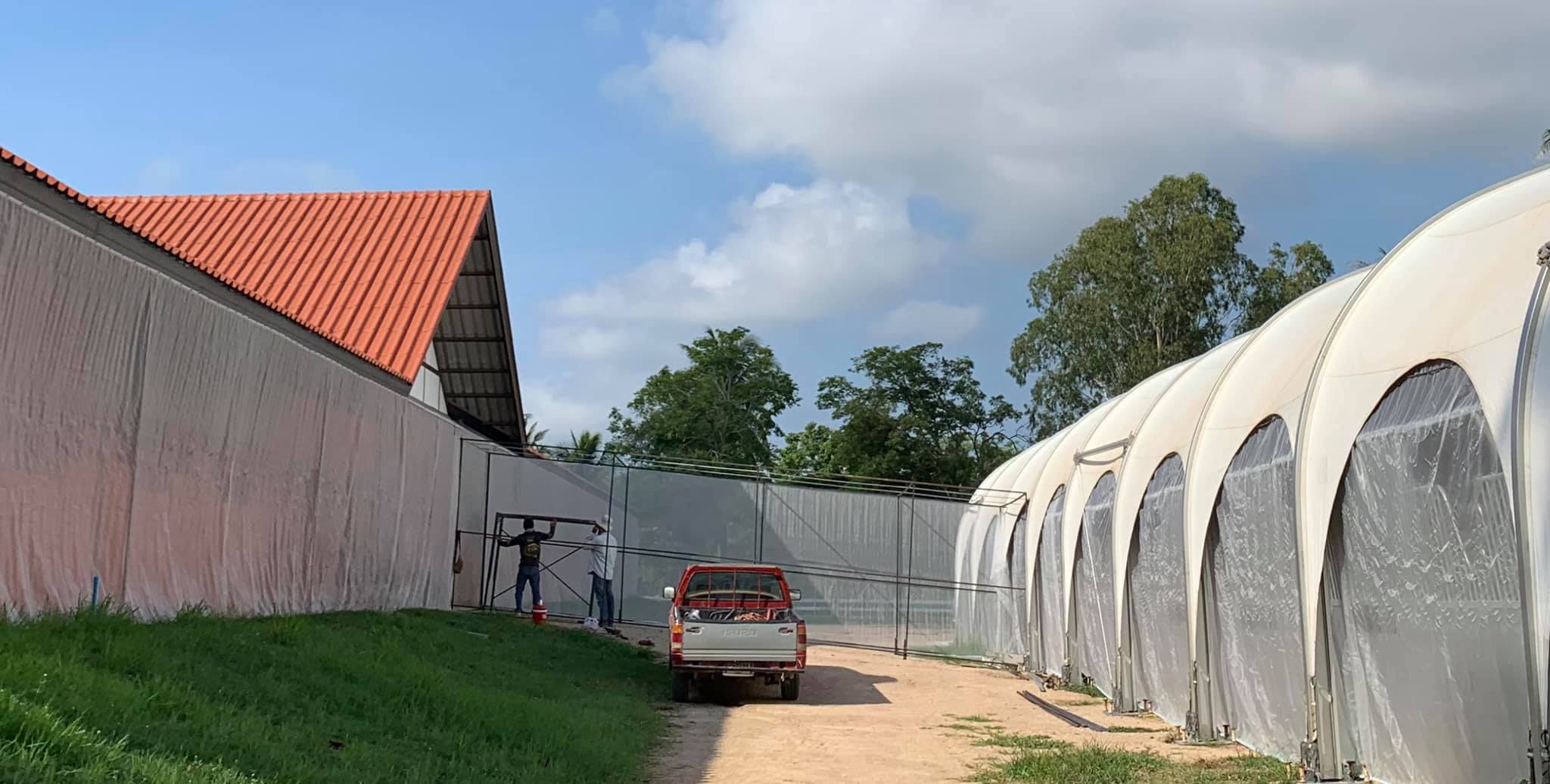
Thai Polo & Equestrian Club, which hosted the 1st Asian Equestrian Championships in December went into action, quickly converting the indoor stabling facility used at the Asian Equestrian Championship into a vector proof indoor facility and connecting it to an indoor arena. See photos by Dr Zherwin Acosta on the right.
“A sustained, persistent outbreak of [AHS] that spreads to other countries would be devastating, not only to the racing industry and companion animals, but also to some of the poorest workers in the region relying on working horses, donkeys, and mules,” says Simon Carpenter, an entomologist at the Pirbright Laboratory in the United Kingdom.
To vaccinate or not to vaccinate
A first batch of 4,000 vaccines have arrived in Thailand. Thailand is estimated to have a horse population of 12,000. Not everyone is in favour of vaccinating.
There have been other problems. TP Equine Ambulatory Services – Thailand says Amitraz Should not be used as insecticide for around horses. Their experience is that sickness occurred in 3 of 4 horses within 24 hours of being sprayed with an 0.025% w/v aqueous suspension of amitraz. The horses reportedly displayed typical clinical signs of tranquillisation, depression, ataxia, muscular incoordination and impaction colic lasting up to 6 days. Subcutaneous oedema of the face occurred in one horse. The syndrome was accompanied by mild dehydration and acidosis.
Imported zebras are a plausible source for the AHS outbreak in Thailand, says Evan Sergeant, an epidemiologist at AusVet Animal Health Services in Canberra, Australia. Midges don’t transmit the virus through cadavers, meat, or hides, Sergeant says, and they haven’t been documented carrying the virus by air farther than 150 kilometers over land or 700 kilometers over water.
Malaysia has gone on alert, stopping all movement of horses within the country. An AHS education campaign has been started with the Malaysian states that border with Thailand, especially in Kelantan and Perlis, where the borders are known to be porous.
Thailand has now lost its AHS disease-free status with the World Organisation for Animal Health, which means it must halt its imports and exports of equine species, wild and domestic. It will take at least 2 years to apply for disease-free status again.
If this is the case, it will affect the cross-border movement of horses from Malaysia. Polo teams from Malaysia have supported the polo season at Thai Polo & Equestrian Club since 2006. In January, three teams from Malaysia, Royal Pahang, La Familia and Jogo Polo took part in the Thai Polo Open and the Thai Polo Masters.
The next South East Asian Games in Thailand is slated for 2025.
With thanks to Dr Zherwin Acosta for the use of his images.
If you wish to make a donation towards fighting AHS in Thailand, long-time resident and World Cup jumper Helena Gabrielsson shared this website: https://taejai.com/en/d/savehorse/. It is not known if this is an official or unofficial fundraising site.
Related Posts:
African Horse Sickness Outbreak in Thailand


