

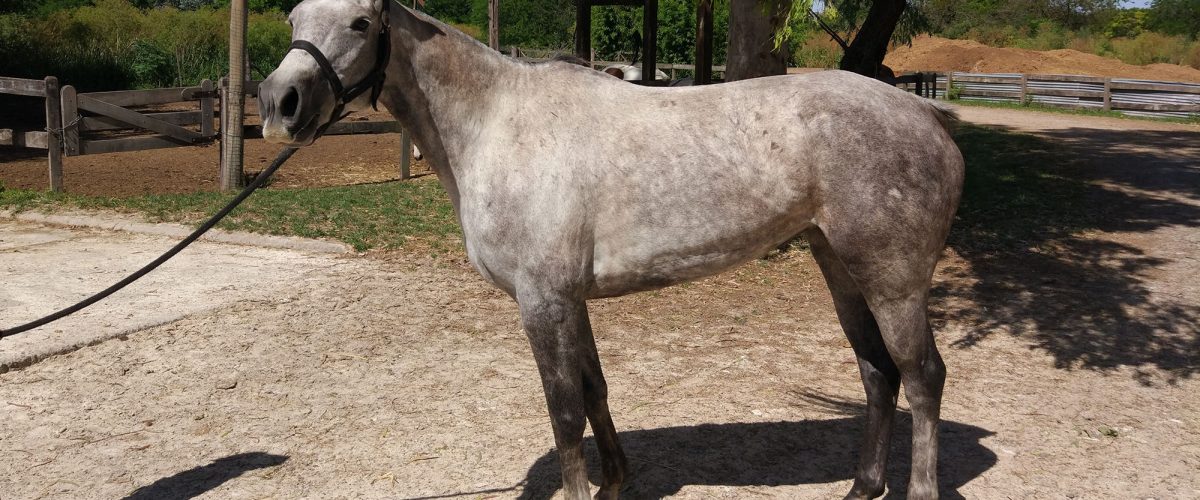
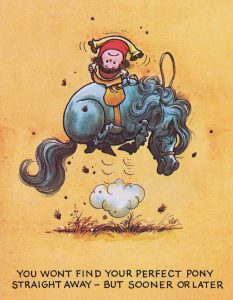
 So often, new riders want to buy horses that are “cheap, good, young and sound.” They can go through months, even years of disappointment simply because these horses hardly ever exist, whether it is in polo, jumping, dressage or any other discipline.
You must have heard, if you pay peanuts, you get monkeys, not horses.
If a horse is cheap, there is very probably a good reason for it. It may be that the horse is lacking in its training or is physically or mentally compromised. Or really just too old.
You very rarely find a horse that ticks off all the boxes. It may be cheap and good, but then it is rarely young and sound. Or if it is cheap and young, it may not be good for you as young means you have to train it or there may be a suspicion it is not going to be good enough. Even trainers don’t waste their time with lousy stock, so if they aren’t good, these horses will go at bottom of the barrel.
Don’t forget, you are paying for the training of the horse. If you expect a horse that is well schooled, you have to realise the time that is put into schooling it is worth something. And value it.
Cheap and young and untrained is probably the easiest to find, as they are “unfinished” horses. If you go for an unfinished horse, you have to ask yourself, are you capable of schooling the horse yourself? Are you the finishing school that this horse needs? Have you done it before? To what success?To pair a young horse with a novice rider is often a recipe for disaster. It is also unfair to the horse as it may never reach its full potential.
There are often dangerous situations – a lady who wishes to take up polo wants to buy a horse cheaply because of her budget. She already has an old polo pony but it is unsuitable for polo any more. She was recommended a good schoolmaster from Argentina but it may be out of her budget. Instead, a vet has suggested she buys an Arabian endurance horse and convert it to polo. That is a disaster waiting to happen. A novice player does not even know what skills she needs to retrain a horse from another discipline. By and large, Arabians are known for their nervous temperament. The horse doesn’t neck rein, and is not even particularly young.
As I wrote in Caveat Emptor, a horse dealer is a horse dealer. They will sell anything, because it is their job to sell.
Let’s face it. If a horse is cheap, it doesn’t tick off all the boxes.
But are all the boxes actually necessary? What if it is an older horse that the owners are looking to sell on to a good home. In that case, it isn’t young, but it may still be a good buy, depending on your time horizon.
If you are looking for a horse to learn on for a couple of years, this older horse may the horse for you. It ticks the two most important boxes.
A young rider learns from an older horse, just as a young horse is taught by an experienced rider. Age should not be a limiting factor when buying a horse for a novice rider. In fact the younger the horse, the more likely it will have problems as it is less “established” in its work.
Most novice polo players need an experienced horse with a great temperament that knows the game. They learn on this horse for a season or two before they progress to a better, faster model. These experienced horses are called schoolmasters,
The schoolmaster may be older, but it is good and if it is manage-ably sound, it ticks three of the four boxes.
And for those who can find them, a young schoolmaster is worth its weight in gold.
If you know how long you want this horse for, then view it as a cost of learning. For example, if you buy a 12 year old horse for 30,000 and sell it two years later for 20,000, you have ‘spent’ or lost 10,000 or 5,000 per year to learn on that horse.
It is better than spending 40,000 for a younger horse and learning nothing on it, because you have wasted two years. Also, after two years you will have a horse that has gone downhill and very probably lost value because you were not teaching it anything other than bad habits, so that you will not realise what you paid for it anyway.
Invest in a schoolmaster, because they are ones that are going to teach you and actually hold their value.
 A good young horse that is complete and firm in its foundations is hard to find, especially here. KL Academy of Polo went to Argentina to buy our polo ponies when we started up, because we know how hard it is to find such horses on the ground in Malaysia.
So the next time you ask for a horse that is cheap, good, young and sound, think what you are asking for. If they are good, young and sound, why should they be sold to you cheaply? Be wary of such offers.
If you aren’t sure, get good advice. Don’t just get any advice, get good advice. Advice is always available from experienced horsemen if you ask nicely. But if you ask everyone randomly, the experienced horseman is likely feel his advice is not valued, and may not bother giving you any advice at all. As I have written, if you are going to ask someone to help you find or buy you a horse, be prepared to pay a fee for such a service. A flat fee rather than a commission, if the person is doing a job for you. Commissions are relative to purchase price, so a flat fee makes more sense if they are on your side. Unlike a horse dealer, whose job it is to get the highest price for the owner, a purchaser should work the other way – to find the best deal for the buyer.
Then there are the people who already know everything. As I have discovered, their karma leads them to end up with the horse they deserve. This is not necessarily a good thing for them, but one they have brought on themselves.
Related Links:
Caveat Emptor
Go Like The Klappers
KL Academy of Polo


