

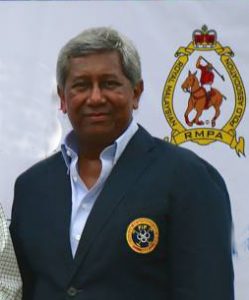
 When I started KL Academy of Polo, my aim was to raise the level of equitation and instruction offered in Malaysia. To do that, KL Academy of Polo made a massive investment in horses. I also insisted we have a policy of hiring qualified professionals and professional apprentices to do the job of instruction.
Malaysia started a National Coaching Accreditation Scheme back in the 90’s. The Malaysian Equine Council signed an agreement with Equestrian Australia, and we have used their syllabus and their assessors to train our instructors here.
Forty-Seven (47) coaches have qualified for their professional level 1 certification since then. Three more have gone on to the more specialised level 2 standard. Another 57 are in training to become certified coaches.
Soon after it was started, even though I had already won three SEA Games gold medals, 12 South East Asian titles, and was jumping the CSI-W World Cup classes in South East Asia and 1.50 m classes in Europe and the Asian Games, I decided I wanted a formal education as an instructor. I started a two-year part-time course. I did learn a lot, and earned a general Level 1. I believe that combining knowledge from the many equine sports I have participated in – polo, show jumping, eventing, dressage, tent-pegging, racing, pony club, and especially course designing, makes me a better instructor.
It was great to train as an instructor because as much as you think you know as a rider, you can learn more. It is essential to have each lesson broken down into the sub-sets – that is what makes me think – improves me as a rider.
Preparation, preparation, preparation. We hear it in equestrian sport all the time. A teacher without a plan is not prepared. I found it enlightening to train how to teach. Preparing for a lesson is when a teacher relearns and learns anew.
Teacher training used a different skill set from just riding, and made me a better rider.
I’m surprised that many ‘instructors’ do not bother learning to teach. I am astounded by the many riders who do not differentiate between grooms and riders with no formal training, and professionally qualified instructors. Riders who claim to be experienced are a dime a dozen. Most of them are great talkers, but who wouldn’t know the difference between a leg yield and a shoulder-in.
Many can’t name the parts of the horse, or put together a bridle. I am amazed that in the 30+ years I have been in the saddlery business, we have gone from selling 20+ types of bits to just three bits that riders know – the Eggbutt Snaffle, Port Mouth Pelham (most can only say Pelham), and Gag Snaffle (‘polo bit’). Frequently, those are the ‘instructors’ talking.
Many polo players started out in other equestrian sports, and we can count many World Cup riders and national athletes amongst our number. That does not qualify them to teach. Teaching is more than just being able to ride. There are many SEA Games players who can’t articulate the correct aids for a canter strike off, even though it is something they do every day.
I used to say those that could, competed, and those that couldn’t became instructors. That isn’t always the case, and as I have aged, I hope I have proven that by becoming a decent coach myself.
Teacher training is continuing education. Many of our national riders are school or college dropouts or have risen from the ranks of grooms and track riders to become polo players. There are gaps in their education, some cavernous.
A new rider is like a blank slate. Rather like a computer, if you fill your hard drive with garbage, it is going to be a case of garbage in = garbage out.
The limit of their instructor’s knowledge is as far as a rider can go. Choose an instructor of limited capacity, as the journey may be short!
 What a Level 1 doesn’t necessarily give you is integrity. That’s what would stop an instructor poaching from the colleagues he works with daily. That’s just manners and respect for others. I recently included someone to a KL Academy of Polo WhatsApp list. He is a boy with a chequered past, one who had previously stolen some premium items from Zack’s Tack. We had caught him then and eventual forgave him. This time, he petitioned all my clients to switch to his ‘instruction’. He is not even enrolled in the NCAS or FEI schemes. I was very hurt that this person would steal from me again.
Riders get what they deserve too, and if they go with an instructor that lacks integrity, I find it is frequently their karma to end up on the ground looking up at their horse more often than others.
Cheap and good is something everyone wants. But we all know that something that is valuable hardly ever comes cheap. If you are going to be cheap, you are probably in the wrong sport. Equestrian and polo are sports that are inherently dangerous. Do not go down the path of being dangerously cheap.
There are choices in Malaysia. There are instructors who have professional qualifications. If you question the system, remember, it is an internationally recognised, Australian system we adopted. Malaysian-qualified instructors have worked all over the world, in Singapore, Australia and Europe.
Choose carefully. The choice is yours.


